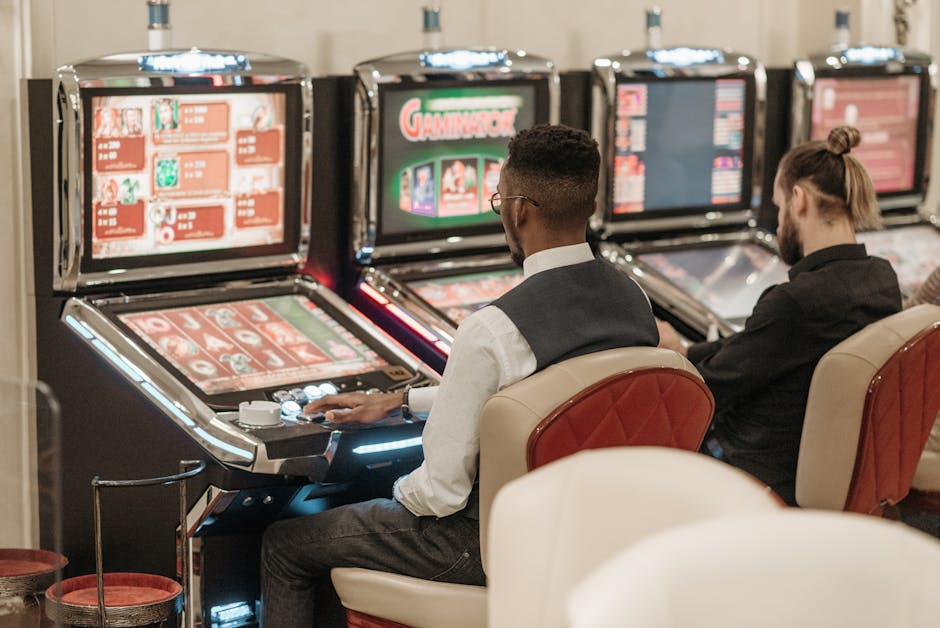
If you have spent any time playing games online, you have likely heard the term RNG (Random Number Generator) mentioned in terms of "fairness" or "safety." Many players glaze over when they see these technical acronyms, but ignoring them is a mistake. Understanding how these systems work is the only way to manage your expectations when playing at a site like MRQ or any other regulated UK casino.
Let’s cut through the jargon. You aren't playing against a "lucky" machine or a computer that knows your history. You are playing against a mathematical sequence. Here is the reality of fairness in the online casino world.

Image Credit: Freepik
Defining the RNG (Random Number Generator)
At its core, a Random Number Generator (RNG) is a piece of software that produces a sequence of numbers or symbols that lack any pattern. Because these numbers have no pattern, the outcome of your game is unpredictable and, crucially, independent of the previous result.
Think of it like a digital, infinitely complex deck of cards that is shuffled after every single millisecond. When you press the "spin" button on a slot machine, the RNG instantly selects a result from millions of possible combinations. It doesn't care if you just won a big prize, and it certainly doesn't care if you have been losing for an hour. It treats every single click as a brand-new, isolated event.
This is the cornerstone of fairness online casino standards. Without a properly tested RNG, a game could be rigged to favor the house or even specific players, which is exactly why the UK Gambling Commission (gamblingcommission.gov.uk) requires all licensed operators to have their software rigorously tested by independent third-party labs.. Anyway,
Why "Guaranteed Wins" are a Red Flag
If you encounter a website or a "strategy guide" claiming that their system offers "guaranteed wins" or a way to "beat the RNG," close the tab immediately. This is the oldest trick in the book.
Because the RNG is designed to be random, no amount of betting patterns, timing, or "hot" streaks can force a win. Any site promising that you can circumvent the RNG is selling you a fantasy. Casinos operate on a mathematical edge; the RNG ensures that the game plays out exactly as the math dictates, not how a human player hopes it will.
The Relationship Between RNG, RTP, and Volatility
While the RNG https://allsimiles.com/understanding-online-games-strategy-probability-and-player-experience/ provides the "randomness," two other metrics define your experience: RTP (Return-to-Player) and Volatility. Understanding how these work alongside your RNG explained is essential for any player who wants to know what they are actually playing.
What is RTP?
RTP (Return-to-Player) is a percentage that describes the theoretical amount of money a game will pay back to players over millions of spins. For example, if a slot has an RTP of 96%, it means that, theoretically, for every £100 wagered, £96 is returned to players as winnings over the long term. This is a long-term statistical average, not a guarantee that you will get 96% of your stake back every time you play.. Exactly.. But it's not a one-size-fits-all solution
What is Volatility?
Volatility (sometimes called Variance) tells you how "swingy" a game is.
- Low Volatility: Frequent, smaller wins. These games keep your balance stable but rarely pay out massive jackpots. High Volatility: Infrequent, potentially large wins. You might go through long dry spells before hitting a significant payout.
Does RNG affect game variety?
The beauty of the modern RNG is that it works across all game types. Whether you are playing a classic 3-reel slot, a complex Megaways slot, or even a digital table game like Blackjack or Roulette, an RNG is running the show behind the scenes.
Slots vs. Table Games
In slots, the RNG determines the position of the reels. In digital table games, the RNG acts as the virtual deck of cards or the virtual roulette wheel. The logic remains the same: the computer does not know what card was dealt last, ensuring that every hand or spin is as fair as the last.
What about Live Dealer games?
Live Dealer games are a bit different. While they use human dealers, the cards are often pre-shuffled or dealt from automated shoes. The human element adds entertainment, but the fairness is still governed by strict regulation and observation, ensuring that the "randomness" is maintained just as strictly as in a digital-only RNG game.
Busting the "Hot" and "Cold" Slot Myth
You will often hear players talk about "hot" slots—games that have been paying out a lot recently—and "cold" slots—games that are "due" for a win. Let me tell you about a situation I encountered thought they could save money but ended up paying more.. Let me be very clear: this is a total myth.
Because of the RNG, a slot machine has no "memory." If a game just paid out a massive jackpot, the RNG does not "know" that. It is just as likely to pay out another jackpot on the very next spin as it is to pay out nothing. Conversely, a slot that hasn't paid out in a week is not "due" to pay out. Every spin is an independent event.

Thinking a game is "hot" or "cold" is a common psychological bias known as the Gambler's Fallacy. Don't let it influence your play. Stick to the metrics, not the feeling of the machine.
30-Second Checklist: Is the Site Fair?
Before you engage with any casino, take 30 seconds to verify these points. This simple audit can save you from a lot of frustration:
Check the Footer: Is there a visible license logo from the UK Gambling Commission? Look for Lab Certifications: Do they link to testing bodies like eCOGRA or iTech Labs? These companies verify that the RNG is actually random. RTP Transparency: Can you find the RTP percentage for the game you are about to play? If it’s hidden, that’s a red flag. Responsible Gaming Tools: Does the site offer clear, easy-to-use tools for setting limits on your time and gameplay? A reputable site like MRQ will prioritize this as much as the games themselves.Conclusion: Play for Fun, Not for Profit
The RNG (Random Number Generator) is the backbone of the online casino industry. It is the system that ensures that your experience is fair and that the house edge is held to a transparent mathematical standard. It does not provide "guaranteed wins," it does not respond to "hot" or "cold" streaks, and it is not a tool designed to make you rich.
Ever notice how by understanding that rngs, rtp percentages, and volatility metrics exist to create a controlled environment of chance, you can approach these games with the right mindset: they are a form of entertainment, not a financial strategy. Always check for your local regulatory licensing, play within your limits, and treat the random outcome for what it is—a digital toss of the dice.
Disclaimer: This blog post is for informational purposes only. Online gambling involves risk. Please gamble responsibly. For help and support, visit the resources provided by the UK Gambling Commission.